


For individuals and families with significant wealth, medical expense planning is not just about covering costs. It’s about preserving capital, maintaining liquidity, and ensuring healthcare needs are met without disrupting sophisticated investment strategies or generational wealth transfer plans.
Rising healthcare costs, increasingly complex insurance structures, and the potential for unexpected medical events require a proactive and integrated financial approach. When strategically addressed, healthcare planning can align with your broader wealth management objectives, allowing you to protect your legacy while maximizing growth opportunities.
The Financial Impact of Medical Expenses
Healthcare costs can be one of the largest and most unpredictable expenses. Recent analyses estimate that Americans owe at least $220 billion in medical debt, with approximately 14 million people (6% of adults) owing over $1,000 and about 3 million people (1% of adults) owing more than $10,000. [1]
For high-net-worth households, the primary risk is not insolvency but opportunity cost—being forced to liquidate investments at suboptimal times or to reduce allocations to high-growth opportunities due to sudden cash flow demands. By building medical expense planning into your overall wealth strategy, you can preserve portfolio integrity while keeping liquidity available for strategic moves.
Strategies for Managing Healthcare Costs
- Understand and Optimize Insurance Coverage
A comprehensive understanding of your health insurance is the first step toward minimizing medical expenses. Review the specifics of your policy, including covered services, deductibles, co-payments, and out-of-pocket maximums. Strategic adjustments, such as choosing a high-deductible health plan (HDHP) paired with a Health Savings Account (HSA), can help you lower premiums while leveraging tax advantages. Supplemental insurance policies for dental, vision, or critical illness coverage can also fill gaps and reduce potential out-of-pocket costs. [2]
- Leverage Tax-Advantaged Accounts
HSAs and Flexible Spending Accounts (FSAs) are powerful tools for managing medical expenses while maximizing wealth. Contributions to HSAs are tax-deductible, and the funds grow tax-free, providing an opportunity to invest unused balances. Unlike FSAs, HSA funds roll over year to year, allowing long-term growth that aligns with your broader financial strategy. It can also be helpful to view your HSA account as an additional investment vehicle to supplement retirement planning. [3]
- Integrate Healthcare Costs into Financial Planning
For those focused on wealth maximization, planning for healthcare costs is non-negotiable. Allocate a specific portion of your monthly income to routine expenses such as prescriptions, preventive care, and doctor visits. Additionally, maintain a well-funded emergency account earmarked for unexpected medical costs. This approach helps ensure that your long-term investments remain intact even during unforeseen financial strain. [4]
- Prioritize Preventative Care
Preventive care is one of the most cost-effective ways to manage healthcare expenses. Many insurance plans fully cover preventive services, such as annual check-ups, screenings, and vaccinations. Staying proactive about health not only reduces future medical costs but also allows you to remain in optimal condition to focus on wealth-building activities. From a financial perspective, investing in preventive care today minimizes expensive treatments in the future, preserving more capital for other investments.
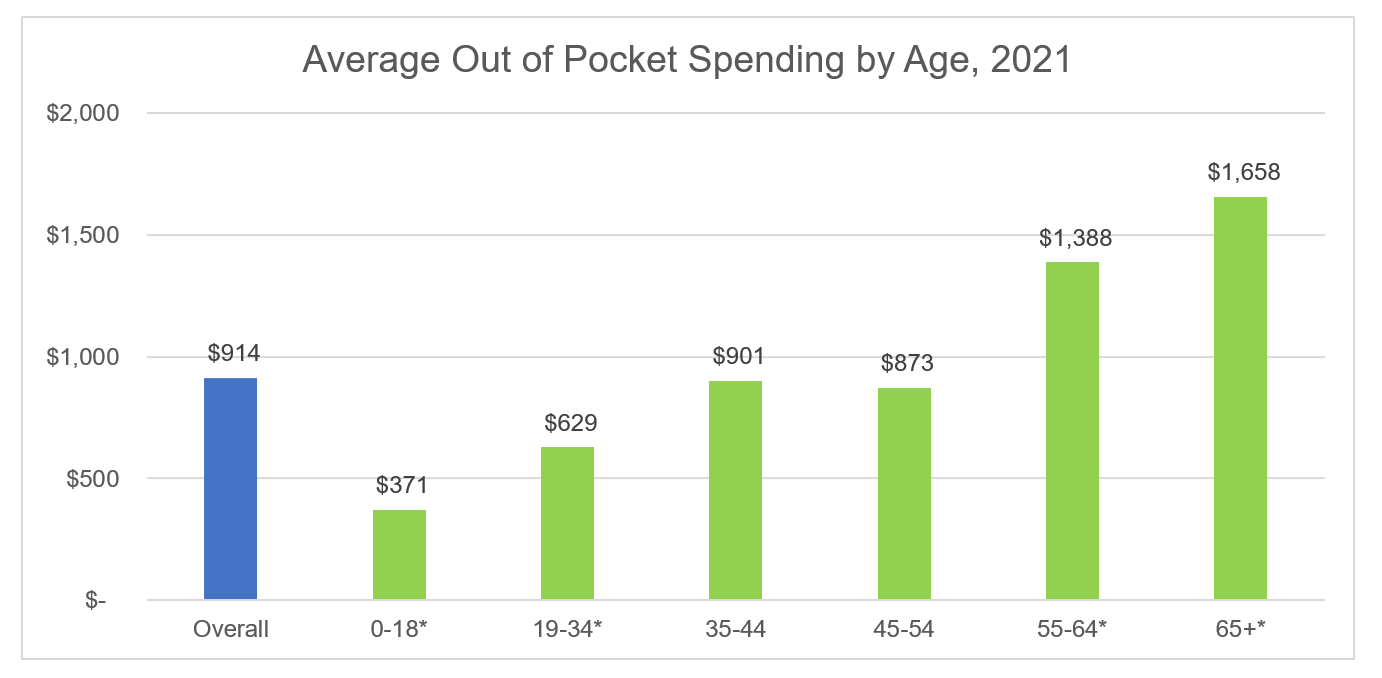
Note: *Estimate is statistically different from the average for all other age groups | Source: KFF Analysis of 2021 Medical Expenditure Panel Survey
- Explore Available Resources
If faced with substantial medical bills, explore all available resources. Healthcare providers often offer payment plans or discounts for upfront payments. Nonprofit organizations and government programs can provide additional assistance. Negotiating medical bills [5] or working with financial advocates can also yield significant savings, ensuring that more of your resources remain dedicated to wealth generation.
Aligning Medical Expenses with Investment Strategies
Medical expense planning should be integrated into your overall financial strategy. This involves assessing how healthcare costs impact liquidity needs, risk tolerance, and long-term investment goals. For example, tax-advantaged accounts like HSAs can serve as both a safety net for healthcare costs and a component of your retirement portfolio.
For high-net-worth individuals, considering healthcare costs in estate planning is equally crucial. Establishing trusts or dedicating investment accounts to future medical expenses can provide additional financial security while permitting your overall wealth to continue to grow.
Securing Your Financial Future Through Proactive Planning
Healthcare costs are inevitable, but they do not need to derail your long-term objectives. By understanding your insurance coverage, leveraging tax-advantaged accounts, integrating healthcare into your financial plan, prioritizing prevention, and optimizing available resources, you can protect your wealth and remain positioned for sustained growth.
Taking a proactive, integrated approach today can ensure your financial health – and your legacy – are prepared for the unexpected. Let MBE Wealth help you strategically incorporate health cost planning into your finances. Reach our wealth advisors today at MBE Wealth.
Disclosure
The information provided is for educational and informational purposes only and does not constitute investment advice, and it should not be relied on as such. It should not be considered a solicitation to buy or sell a security. It does not take into account any investor's particular investment objectives, strategies, tax status, or investment horizon. You should consult your financial advisor, attorney, or tax advisor. For additional information and disclosures, please visit our website at www.mbewealth.com. MBE Wealth Management, LLC is a registered investment advisor.
This content is developed from sources believed to be providing accurate information, and provided by Fiducient Advisors. It may not be used for the purpose of avoiding any federal tax penalties. Please consult legal or tax professionals for specific information regarding your individual situation. The opinions expressed and material provided are for general information and should not be considered a solicitation for the purchase or sale of any security.
Sources
[1]The Burden of Medical Debt in the United States | KFF, February 12, 2024
[2]What is Supplemental Health Insurance? | Healthinsurance.org
[3]How to Plan for Rising Health Care Costs | Fidelity.com
[4]Report on the Economic Well-Being of U.S. Households in 2021 | Federalreserve.gov
[5]How to Negotiate Your Medical Bills | Time.com