


In January of 2024, a disturbing incident shook the financial world as a Hong Kong bank employee fell victim to deepfake technology, resulting in a fraudulent payout of $25 million.[1] This sophisticated deception, where AI-generated replicas of colleagues who participated in a video conference, underscores the growing threat posed by AI-driven fraud. Another harrowing example involved Paddric Fitzgerald, who received a distressing call purportedly from his kidnapped daughter, a cruel manipulation facilitated by AI-generated audio.[2] These distressing instances underscore the alarming capabilities of deepfake technology and its potential to exploit even the most cautious individuals.
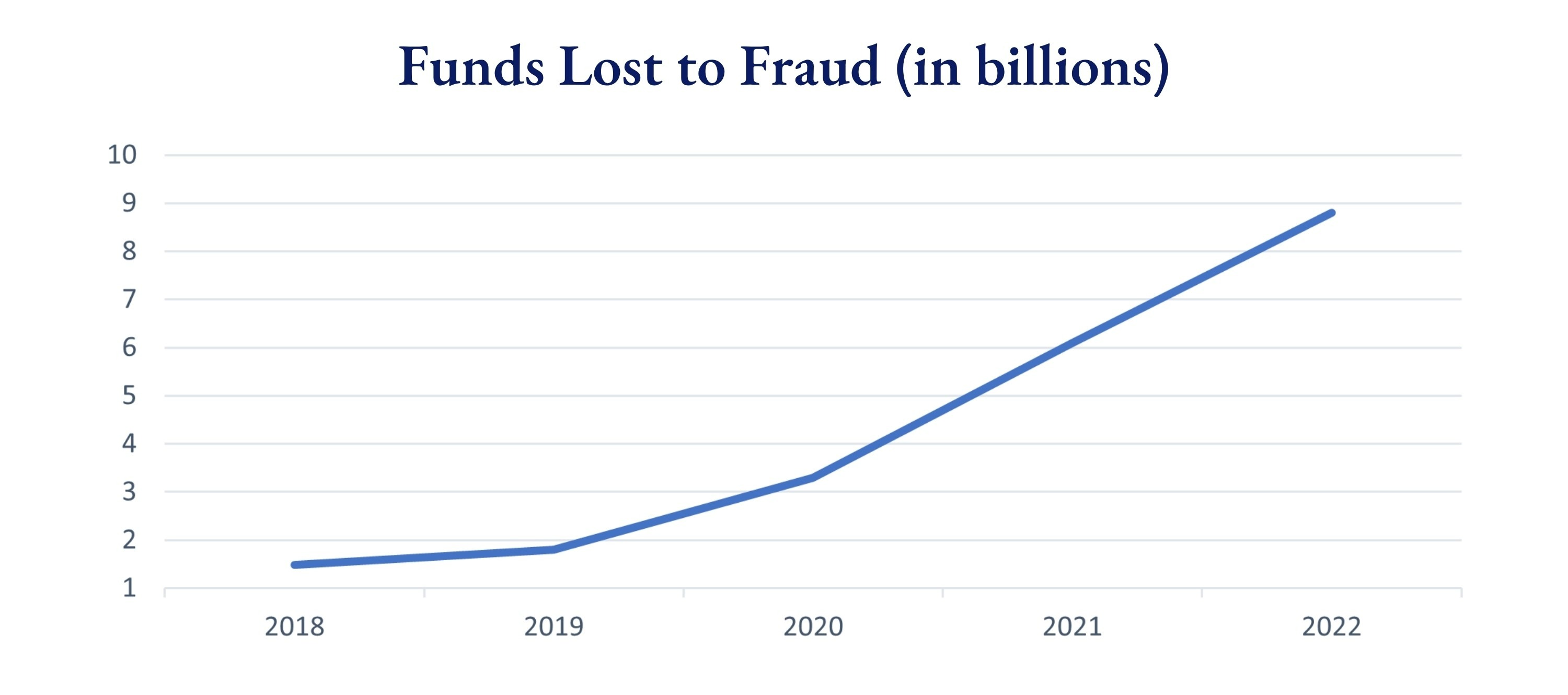
Source: Federal Trade Commission. As of February 2018 – February 2023.
Beyond deepfake technology, AI has the capability to swiftly scour the Internet for personal data, facilitating a form of fraud known as “synthetic fraud.” Synthetic fraud entails the creation of a new identity by blending genuine and falsified information. For instance, a perpetrator might utilize a stolen social security number alongside a fictitious name to initiate account creation and conduct transactions. This type of fraud poses significant challenges for monitoring and detection, as fraudsters often invest years in building a solid credit history under a fabricated identity before executing final fraudulent activities and subsequently abandoning the identity. Synthetic fraud stands as the fastest-growing category of financial crime in the United States, signifying the urgent need for robust countermeasures. In fact, the rise of advancing technology has contributed to an increase in fraud of over 30% from 2022 to 2021.[3]
As fraudulent activities evolve in sophistication, maintaining vigilance and implementing proactive defense strategies are imperative for consumers. Staying abreast of recent AI trends is paramount, requiring dedication to exploring news articles, podcasts, and participating in relevant workshops or webinars. These avenues provide valuable insights into AI’s evolving role in fraud and strategies to mitigate risks. Online courses available through platforms like Coursera, Udemy, and edX offer opportunities to deepen understanding, covering introductory to advanced levels taught by industry professionals. Understanding that scammers often exploit emotions emphasizes the significance of staying aware of recent trends to recognize potential warning signs before emotions compromise judgment.
Enforcing robust security measures is crucial in safeguarding personal information effectively. This entails employing strong, unique passwords with a combination of numbers, symbols, and letters for each website, and maintaining updated security software with automatic updates enabled. Regularly monitoring communications from entities relying on sensitive data, such as the IRS, banks, and credit card providers, enables early detection and prevention of fraud. Neglecting the communications from these institutions increases vulnerability, particularly among susceptible demographics like children, the elderly, and the homeless. Investing in identity protection services offering comprehensive coverage against all forms of fraud serves as an additional layer of defense.
In conclusion, as artificial intelligence-driven fraud becomes increasingly prevalent and sophisticated, it is imperative for individuals to remain vigilant and proactive in their defense strategies. By utilizing advanced technologies, implementing thorough security measures, and creating a culture of awareness and education, we can better protect ourselves against the growing threat of fraudulent activities. With a concerted effort and a commitment to staying informed and adaptive, we can mitigate the risks posed by AI-driven fraud and safeguard our financial well-being and digital assets.
As financial risks shift over time, having the right guidance and a plan in place can make all the difference. Our team at MBE Wealth is here to help you take thoughtful steps to safeguard your personal information and financial future. Connect with our trusted advisors today, and let's put a plan in place that helps you feel secure and informed.
Disclosure
The information provided is for educational and informational purposes only and does not constitute investment advice, and it should not be relied on as such. It should not be considered a solicitation to buy or an offer to sell a security. It does not take into account any investor's particular investment objectives, strategies, tax status, or investment horizon. You should consult your financial advisor, attorney, or tax advisor. For additional information and disclosures, please visit our website at www.mbewealth.com. MBE Wealth Management, LLC is a registered investment advisor.
This content is developed from sources believed to be providing accurate information, and provided by Fiducient Advisors. It may not be used for the purpose of avoiding any federal tax penalties. Please consult legal or tax professionals for specific information regarding your individual situation. The opinions expressed and material provided are for general information and should not be considered a solicitation for the purchase or sale of any security.
Sources
[1] https://www.cnn.com/2024/02/04/asia/deepfake-cfo-scam-hong-kong-intl-hnk/index.html, February 2, 2024
[2] AI heralds the next generation of financial scams (ft.com), January 18, 2024
[3]New FTC Data Show Consumers Reported Losing Nearly $8.8 Billion to Scams in 2022, February 23, 2023